There’s a stretch of time, roughly the hour after sunrise and the hour before sunset, when everything looks better. Shadows get long, faces soften, and even a car park looks like the opening shot of a film. Photographers call it golden hour, and it’s where film colour really comes alive.
Why the light changes
When the sun is low, its light travels through much more of the atmosphere before it reaches you. Along the way, a lot of the blue gets scattered out. What’s left is warmer: yellow, orange and, near the end, pink.
Low light also comes from the side instead of from above. That means:
- Long, soft shadows that give shape to hills, buildings and faces.
- Glowing edges where light catches hair, grass and waves.
- Gentle contrast. The harsh midday difference between bright and dark softens, so there’s detail everywhere.
Film loves all three. The warm light, the soft transitions and a little halation around bright edges add up to that glow people try to recreate with filters.
Same photo, two films
This is where your choice of film matters. Here is the same frame of wind turbines at the end of the day. ELEV DAWN is built for golden hour: it pushes warmth and turns the haze into gold. ELEV DUSK leans the other way, into pink skies and violet shadows, as if the sun has just gone.
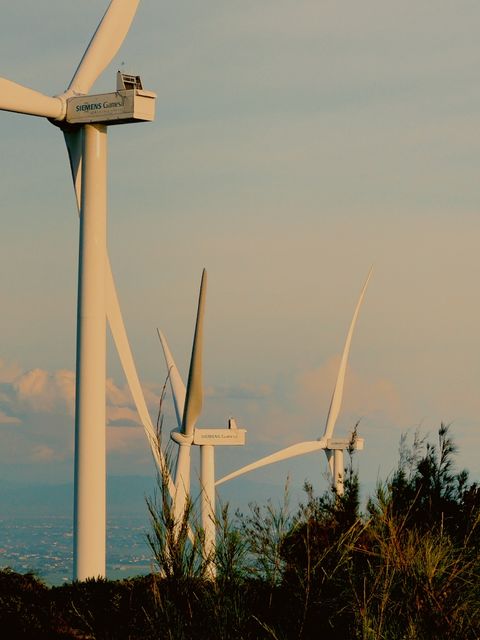
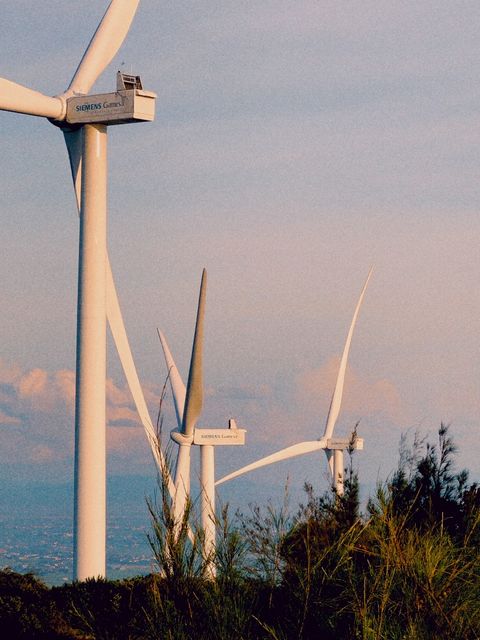
Same place, same moment, two different memories. A good question to ask before you shoot: do I want this to feel like the light arriving, or the light leaving?
After the sun goes down
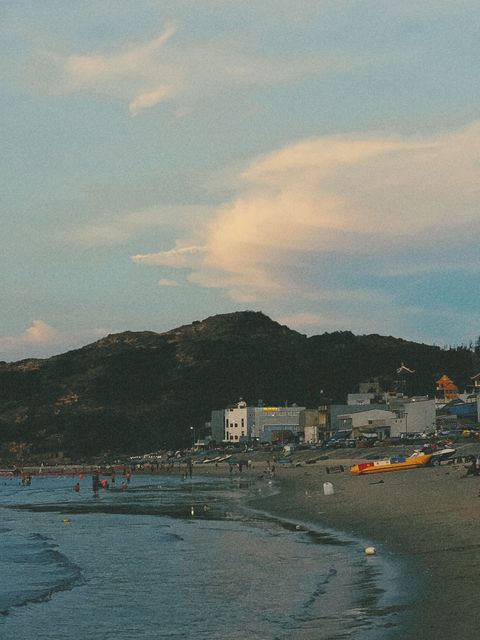
Golden hour doesn’t end when the sun disappears. For a few minutes afterwards, the sky can turn pink and lilac while the ground goes quiet and blue. It’s easy to miss because it happens after most people have put their phones away.
The beach below was shot just after sunset. A film with soft contrast keeps the colour in the clouds without crushing the hill into black.
How to shoot golden hour on your iPhone
- Check when sunset is, and arrive early. The best light often comes 20 to 40 minutes before the sun touches the horizon, not at the moment itself.
- Put the sun behind or beside your subject. Backlight gives you glowing edges and soft faces. Side light gives you shape and long shadows.
- Don’t fight the warmth. It’s tempting to “correct” the orange. Leave it. That colour is the whole point.
- Protect the highlights. Tap on the brightest part of the sky to expose for it, so it doesn’t turn white. Film looks are forgiving in the shadows, less so in blown-out skies.
- Keep shooting after sunset. The pink and blue minutes are short, and they’re often the best frames of the evening.
Golden hour in Elevcam
Pick a warm film like ELEV DAWN before you start, and you’ll see the look live in the viewfinder while you frame, with its grain and glow. When the light turns pink, swipe the film chips to something like ELEV DUSK and keep going. Elevcam also gives scene tips, for example when you’re shooting into a backlit sky, and can suggest films that suit the light.
Every shot lands on your roll with its look applied, and you can still change the film later, because your original photo is never touched.