Look closely at an old photo and you’ll see it isn’t perfectly smooth. There’s a fine, restless texture in the sky, in the shadows, even across a face. That texture is grain, and it’s one of the quiet reasons a photo feels like a moment someone actually lived.
Where grain comes from
On a real roll, the image is made of countless tiny light-sensitive crystals. When light hits them, some turn into specks that build up the picture. They’re scattered at random and come in slightly different sizes. So instead of a clean grid of pixels, you get a soft, irregular pattern that is different in every single frame.
That randomness is the key. Digital noise tends to look like coloured static sitting on top of the photo. Film grain looks like it belongs inside it. It follows the light: finer in bright areas, more visible in the mid-tones and shadows.
Why it makes photos feel real
Our eyes are suspicious of surfaces that are too perfect. A sky that is one flawless gradient, or skin with no texture at all, reads as “processed” even when we can’t say why. A little grain does three things:
- It adds texture. Flat areas like sky, sand and walls stop looking like plastic.
- It ties the frame together. Grain sits over everything evenly, so the photo feels like one object rather than a stack of sharpened details.
- It carries a memory. For most of us, grain means holiday prints, family albums and photos from before phones. It sets a mood before we’ve even looked at what’s in the picture.
Grain doesn’t make a photo better. It makes it feel closer.
Low grain, high grain
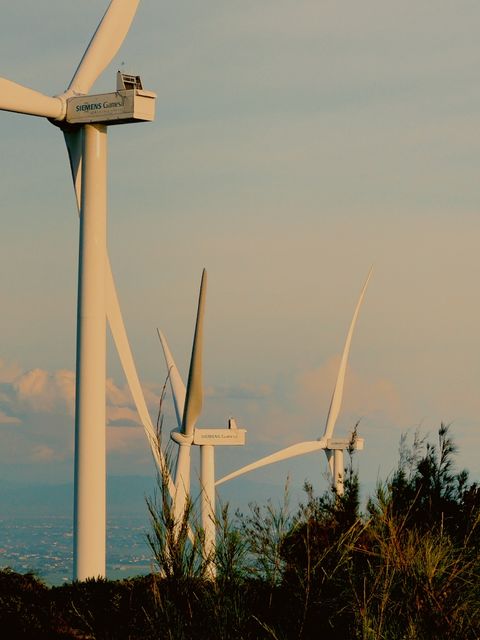
Here’s the same hilltop view through two Elevcam films. ELEV MAPLE is a low-grain film, so the scene stays clean and crisp. ELEV ARCADE has high grain and high contrast, and the same bay suddenly feels older and warmer, like a print found in a drawer.


Neither is right or wrong. Low grain suits bright, graphic scenes where you want colour to do the talking. High grain suits moments you want to feel nostalgic, or scenes that are a little busy, where the texture helps pull everything together.
The beach hut below shows the same thing on a closer subject. With ELEV RAIL’s low grain, the life jackets stay sharp and bright. With ELEV ARCADE, the whole frame softens into something that feels like a summer years ago.


How much grain should you use?
A few rules of thumb:
- Look at your photo at the size people will see it. Grain that looks strong when you zoom in is often just right on a phone screen, and invisible in a small grid.
- Bright scenes can take more grain than you think. Sky and sand are where grain is most visible and most flattering.
- Be gentle with faces. A little grain is kind to skin. A lot can make it look rough. If there are people close up, choose a lower-grain film or turn the grain down a touch.
- Keep it consistent. If you’re posting a set, use the same film and grain level across all of them. That’s what makes a feed feel like one story.
Grain in Elevcam
In Elevcam, grain is part of each film, and you see it live in the viewfinder while you frame the shot, together with the film’s colour and halation. You don’t need to guess how it will look afterwards.
If you want more or less, open the photo in the editor and adjust Grain there. Your original is never changed, so you can come back and try again as often as you like. And if you find a grain level you love, copy the look and paste it onto the rest of the set in one go.
Start with the film as it is. Most of the time, the grain is already where it should be.